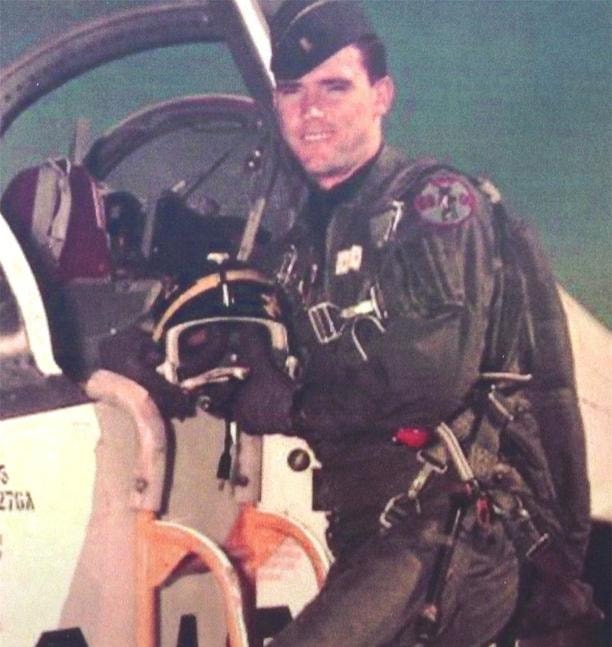
1st Lieutenant • United States Air Force
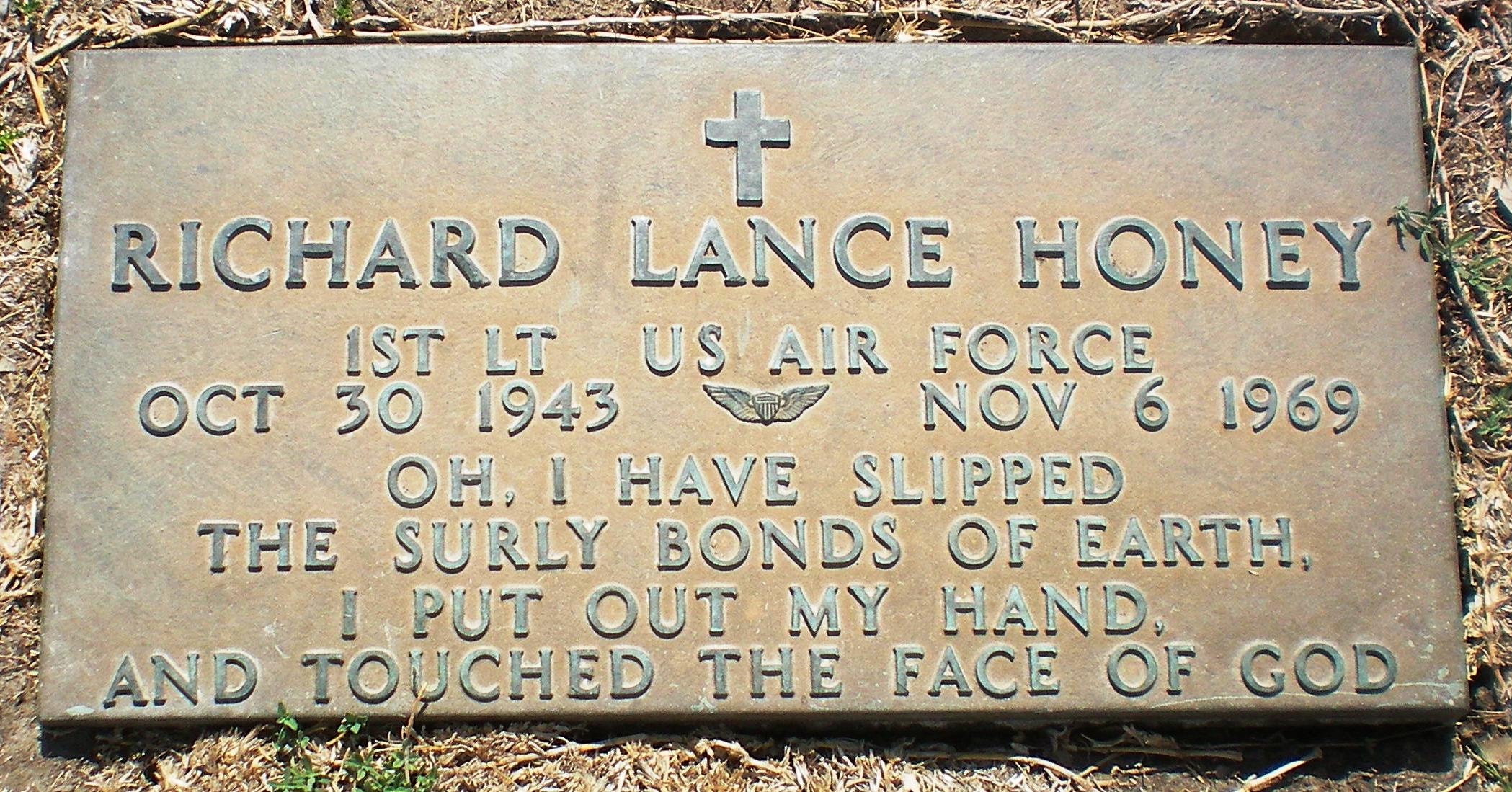
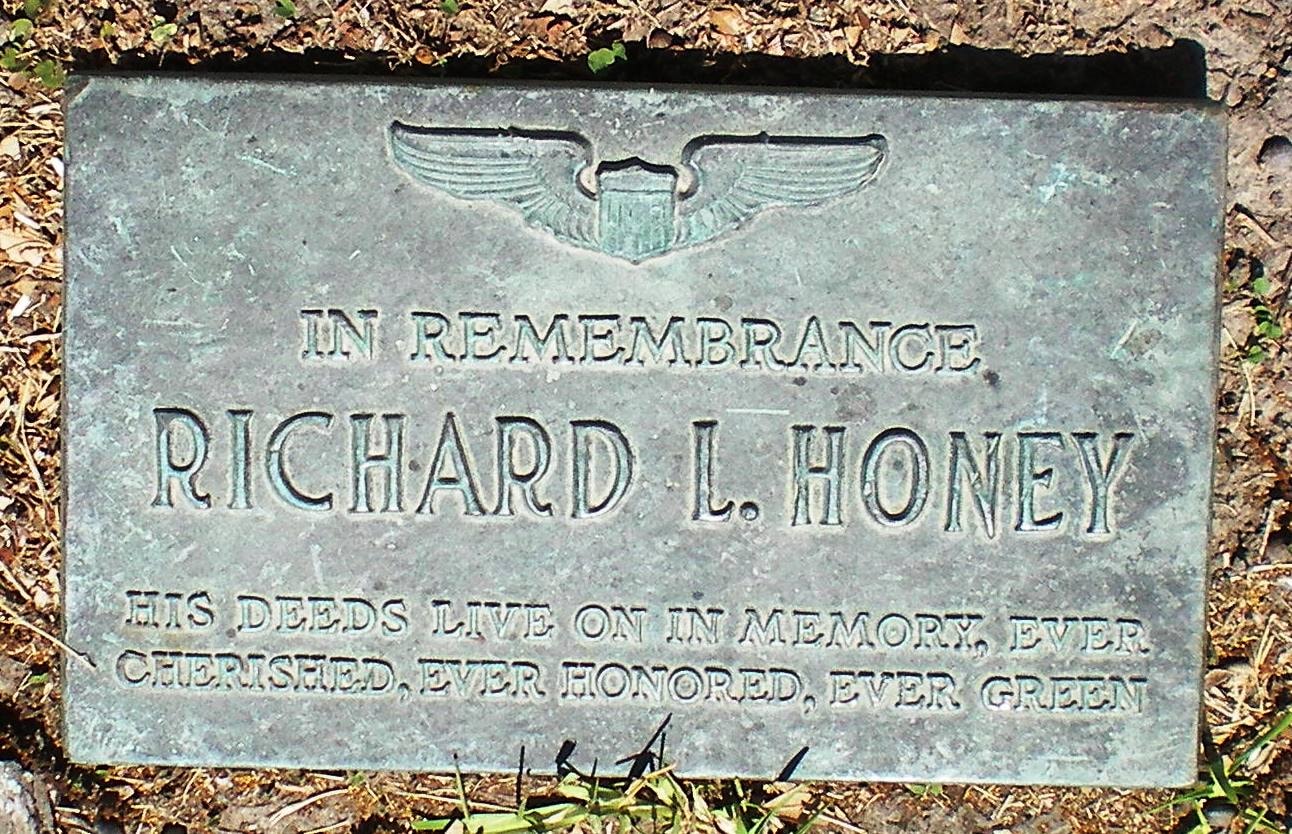
Richard Lance Honey
1943–1969
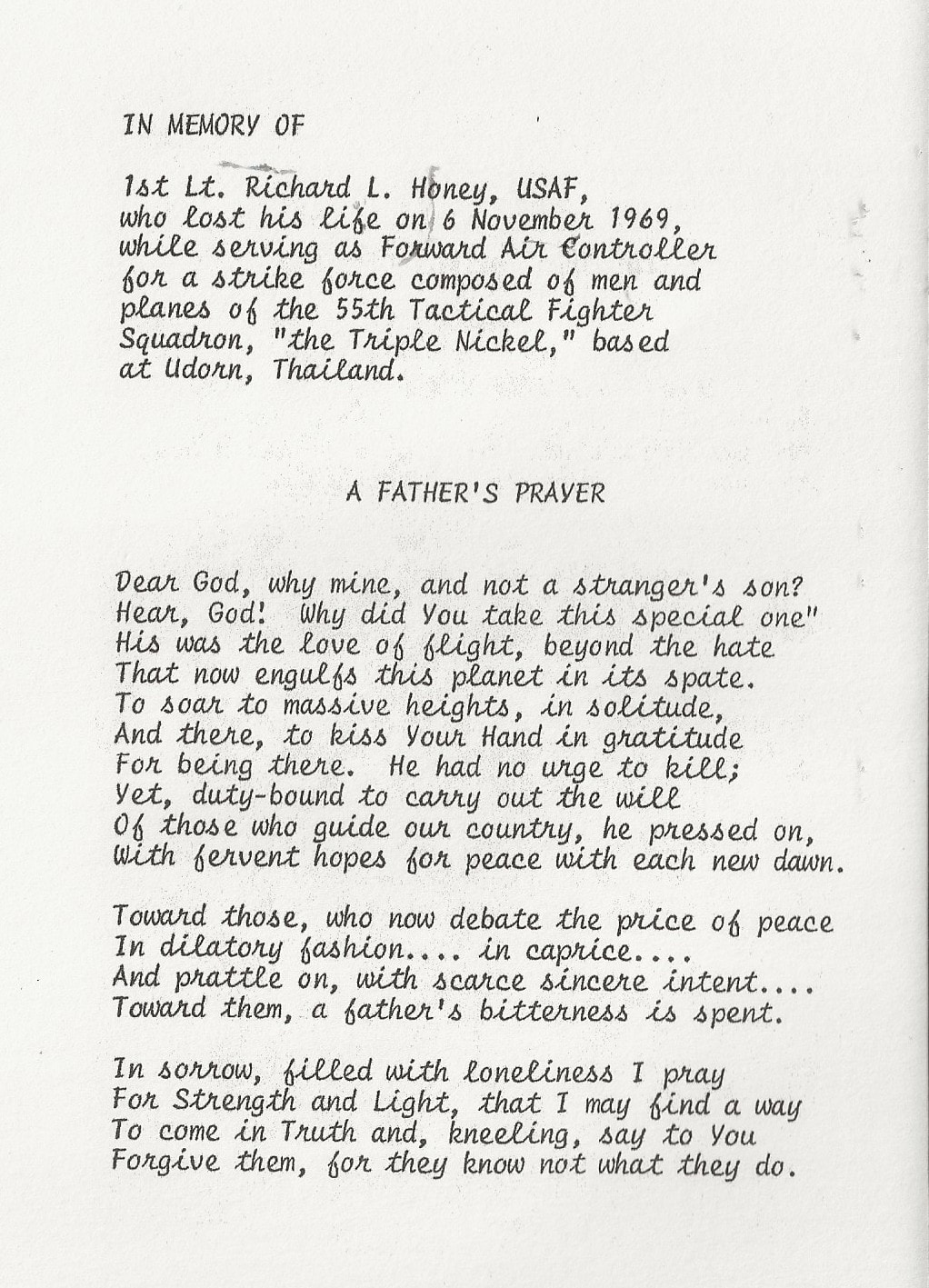
This poem was written by Robert Honey (1913–1976) upon receiving the news that his son, 1Lt Richard Lance Honey, USAF (1943–1969), piloting a Phantom F-4 jet over Laos, had been shot and killed on Nov. 6, 1969 (Vietnam War). The entire Bullert family was shocked and heartbroken. This poem was dated “Nov 1969”.
Born
October 30, 1943 — Rhinelander, Oneida County, Wisconsin
Died
November 6, 1969
Location
Laos (hostile fire — died of wounds; body recovered)
Burial
South Park Cemetery, Pearland, Brazoria County, Texas
Education
Graduate of Texas Tech University
Tour began
July 27, 1969
Family Connection
1st Lt. Richard Lance Honey was born to June Marie Bullert (November 22, 1917 – April 23, 1979) and Robert Leroy Honey (October 20, 1912 – August 30, 1976). Through his mother June Marie Bullert, Richard was a direct descendant 4th great-grandson of Daniel Buller of West Prussia.
The Story of Laredo 03
Excerpted from Chapter 1, "Fallen Comrades," in Sierra Hotel: Flying Air Force Fighters in the Decade after Vietnam by Clarence R. "Dick" Anderegg, published for the Air Force History and Museum Program, USAF, Washington, D.C., 2001.
"Oh, there are no fighter pilots down in Hell."
First line of a fighter pilot drinking song
On November 2, 1969, an F-4D from the 555th Tactical Fighter Squadron (TFS) ripped along at high speed and low altitude above a dirt road through northern Laos. The big fighter essed back and forth across the track so the two-man crew could look for targets to strike — North Vietnamese supplies earmarked for use against U.S. forces and their allies. The jet's weaving flight path also made it more difficult for antiaircraft gunners to track the green, black, and tan camouflaged Phantom II.
Suddenly, a single .50 caliber bullet smashed through the canopy quarter-panel and struck the back-seater in the chest. Only two years out of college, 1st Lt. Richard Lance Honey bled to death in the time it took his pilot to race at supersonic speed to the nearest air base.
Four decades have seen bitter debate among Americans about the morality of the war in Vietnam. Yet, to a fighter pilot, the answer to the question of why Rick Honey was in Southeast Asia was an easy one: his nation called.
Their call sign was Laredo 03, and their mission was to find targets along the stretch of dirt highway known as Route 7. The small, dusty road ran from the Laos–North Vietnam border westward to the Plain of Jars in central Laos. Laredo 03 was a fast forward air controller (FAC) mission. Once they found a target — typically a truck or two, or perhaps a poorly hidden supply cache — they would rendezvous with other fighters, guide them to the target, mark it with a white phosphorous smoke rocket, and then direct the other fighters' bombs onto the target.
The scheme of fast FACs directing flights of other fighters onto small targets was the predominant interdiction tactic used in Laos along the Ho Chi Minh Trail, but it was very ineffective. Even the fast FAC familiar with his area had a difficult time finding targets, because he had to fly fast enough to survive AAA (antiaircraft artillery), and he had to fly high enough to stay out of the small arms fire — such as that which killed Honey.
When Honey was killed in November 1969, it was "halftime" in the air war over North Vietnam — the time between Rolling Thunder (1965–1968) and Linebacker (1972). Attacks in North Vietnam were not allowed between the two major campaigns while negotiators attempted to end the war through diplomacy. The only targets were the difficult-to-find and harder-to-hit traffic along the Ho Chi Minh Trail. Waves of multimillion-dollar jets sought, on a daily and nightly basis, to destroy trucks worth only a few thousand dollars each.
The answer was simple: with the equipment and training they had, it was the only way to try to get the job done.
Heroes
On November 6, 1969, an F-4D from the 555 Tactical Fighter Squadron flew at a high speed and low altitude above a dirt road through northern Laos.
The aircraft was under continuous hostile fire.
Suddenly, a single .50 caliber bullet smashed through the canopy quarter-panel and struck the back seater in the chest.
Only two years out of college, 1 Lt. Richard Lance Honey was fatally injured despite a heroic effort to get him medical help.
Tributes & Remembrances
Happy Birthday Rich, Today is your birthday and I'm sure you are off partying with the rest of the fallen heroes. Happy Birthday!!
I promise 100% Rich, I've adopted your fallen profile on airforce.togetherweserved.com and promise to complete your profile with the pride and passion that you would have if doing it yourself.
You Will Always Be Remembered and Loved, Rick. I remember saying goodbye to you guys in California as you headed for Udorn. That was the last time any of us 'wives' would see you, Rick. We all flew to Houston to be with Donna for your funeral. Months later when the tour was completed for the rest of your buddies, Donna came to San Francisco to greet everyone. It was therapeutic for all. How we missed you. I will never forget you, dear friend. Little did I know that years later a different F-4 would take Doug's life in Germany. I am sure you two are still doing what you love best — 'dancing the skies on laughter-silvered wings.'
Honoring another hero on his special day. Thank you for your dedication and service to our nation. Rest in peace, Lt. You are not forgotten.
Rest in Peace, my Brother. You will not be forgotten.
A very proud cold war USAF veteran remembers you on this day. May God bless you and your family always. I salute you. Thank you.
We will never forget you.
I am a monument to a black period in this country's history. I am the Vietnam Wall, composed of two angled granite walls inscribed with the names of fifty-eight thousand, one hundred thirty-four American men and women who died in hell — that was Vietnam. Many people come to see me. Strangely they come mostly in silence — old people, young people, children, mothers, fathers, widows, and veterans, all for reasons of their own. They bring gifts, pictures, letters, flowers, poems and cigarettes. The letters speak of grief and loneliness and regret. They ask forgiveness. They are an outpouring of pain. The people softly touch names on my face. They water my grass with tears. Then they leave in silence — and I hope in peace. For I am more than two stone walls. I am a thank you from a nation that forgot. I am a long past-due apology. I am healing for wounds too long left untended. I am a tribute paid to fallen warriors. I am the Vietnam Wall. America has forgotten the wars. Will she remember her warriors? You may be gone, but you are not forgotten. We will never forget.
1st Lt. Richard Lance Honey earned the Distinguished Flying Cross for heroism in aviation at the cost of his life. The cross symbolizes sacrifice, and the propeller symbolizes flight.
In Memoriam


